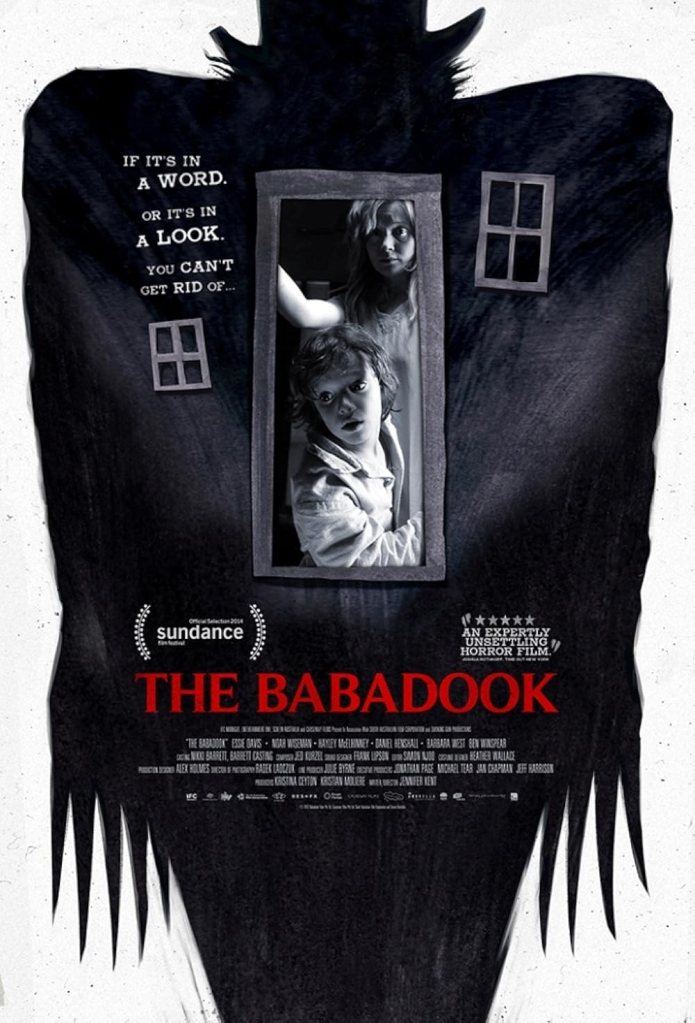
The Babadook is a horror film that I admire more than I enjoy. The concept is there, and the Babadook is a perfectly creepy character, embodying the grief that always lurks long after a loss; but the execution can be suffocating. Jennifer Kent’s debut is impressively controlled, and it’s no wonder this film has left such a mark on modern-day horror.
At its heart is the story of Amelia, a grieving widow raising her only son, and the terrible toll that unprocessed loss can take. The Babadook itself is born from a mysterious children’s book that seems to appear out of nowhere, its pop-up illustrations taunting Amelia with a creature that may or may not be real. The metaphor is clear, but it’s handled with such style and conviction that it never feels cheap.
That said, there’s no denying this film is tough to sit through at times. The child, Samuel, screams, throws tantrums, and grates on the nerves in a way that can be exhausting well before the second half of the film. His behavior mirrors Amelia’s emotional breaking points and while the experience isn’t always pleasant, it reinforces the film’s theme of grief as a suffocating presence that can erupt at any moment.
Visually, The Babadook is striking. The muted palette, the shadowy corners, and the book’s nightmarish illustrations all combine to create a world where grief feels inescapable. The pacing is tight, with tension and scares that arrive with a sense of inevitability. It feels like you’re constantly under the threat of the next event, whether it’s the Babadook or a meltdown.
I’m also partial to Australian cinema, and The Babadook is a strong addition to my growing collection. It’s strange, intense, and unwilling to play by American horror’s rules.
The Babadook may not be a film I revisit often, but I very much respect it. Its metaphor is powerful, its atmosphere all-encompassing, and its monster classy and unforgettable. Not all horror has to be “fun,” and this one certainly isn’t. But it lingers, reminding us that grief doesn’t disappear.
 Horror She Watched
Leave a comment