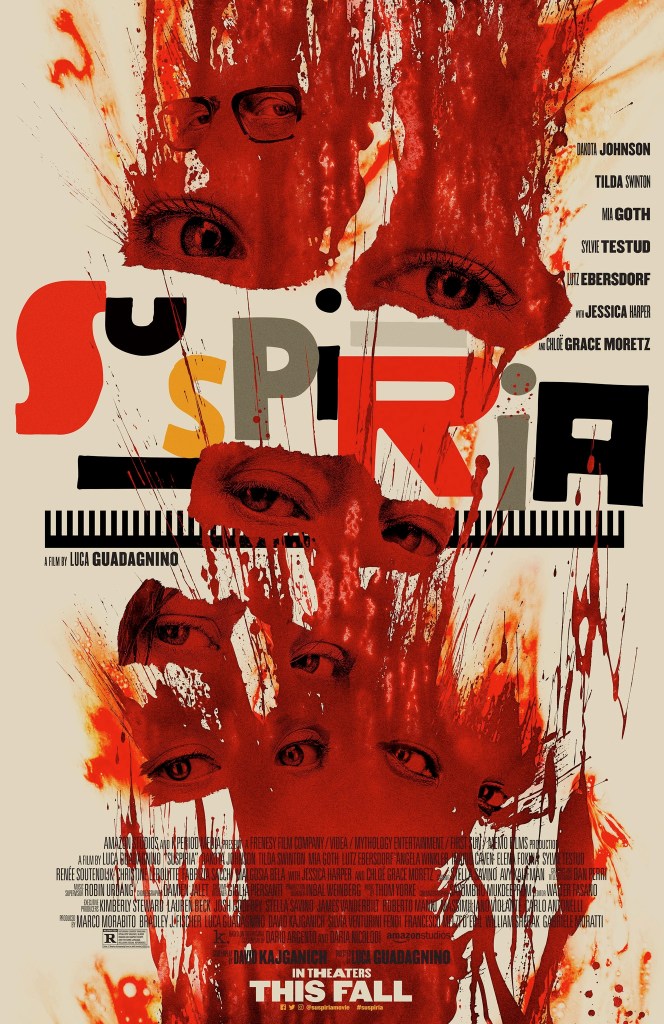
I was skeptical going in because the original Suspiria is such a singular, vibrant horror film that it seemed nothing could hold a candle to it. But this isn’t a candle, its a stick of dynamite. I saw this at the Arclight Hollywood (RIP), and my mouth was agape long after the credits rolled. I was amazed with the acting, score, set design, visuals, tone, and overall just everything about it. Set in a politically fractured 1970s Berlin, this version follows Susie Bannion, a shy girl from Ohio, who arrives at the prestigious but mysterious Marcos Dance Academy. As she rises quickly under the eye of Madame Blanc, the layers of the academy’s full power begin to take shape. Susie’s transformation from new girl to star doesn’t come out of nowhere. It feels inevitable. From the moment she enters the school, she begins growing stronger, more assured. You find yourself cheering for her, although unsure of what exactly you’re hoping she’ll achieve. There’s ritual. Blood. Dance. Control. And something darker underneath it all. Dakota Johnson plays Susie with stunning restraint—balancing fear, desperation, and self-acceptance. And Tilda. TILDA. The only reason I had any faith going in, and she delivers. Mysterious, wise, calculating. She brings such strange elegance to Madame Blanc.
Where Argento’s Suspiria is vibrant, surreal, and awash in saturated neon, Guadagnino’s version is cold and restrained. From the opening shots of grey skies, rain, and brutalist architecture, we know this is going to be something entirely different. The only real color we’re given is red—and we don’t see much of it until Susie’s power begins to fully awaken. Red becomes a symbol of transformation, vitality, and divine force. Visceral. Beautiful. Inescapable. The scenes with Susie’s dying mother are, on the other hand, bleak, desolate, and haunting in a completely different way. To me, the film is about transformation — stepping into the truth of who you are—even when that truth is terrifying. It’s about feminine power in all its forms: maternal, monstrous, divine. Finally, shoutout to Thom Yorke. The score is utterly haunting—it lingers, then stretches tension to the breaking point. It’s one of the most effective soundscapes in recent horror. It’s beautiful. It’s brutal. One dance scene will take your breath away. If it doesn’t, the final ten minutes surely will.
 Horror She Watched
Leave a comment